Built-In Document Pipelines vs. Separate Chunking and Embedding: How to Choose
Compare separate parsing, chunking and embedding with Seahorse Cloud’s built-in ingestion workflow, which automates vectorization and database synchronization.
Key Takeaway
- Choose an integrated ingestion workflow: Seahorse Cloud builds native semantic chunking directly into its document ingestion workflow to reduce the separate components a team must connect.
- Automate parsing to database loading: Seahorse AI-based storage combines an autonomous document parser with semantic chunking, automatic vectorization, and automatic vector database synchronization.
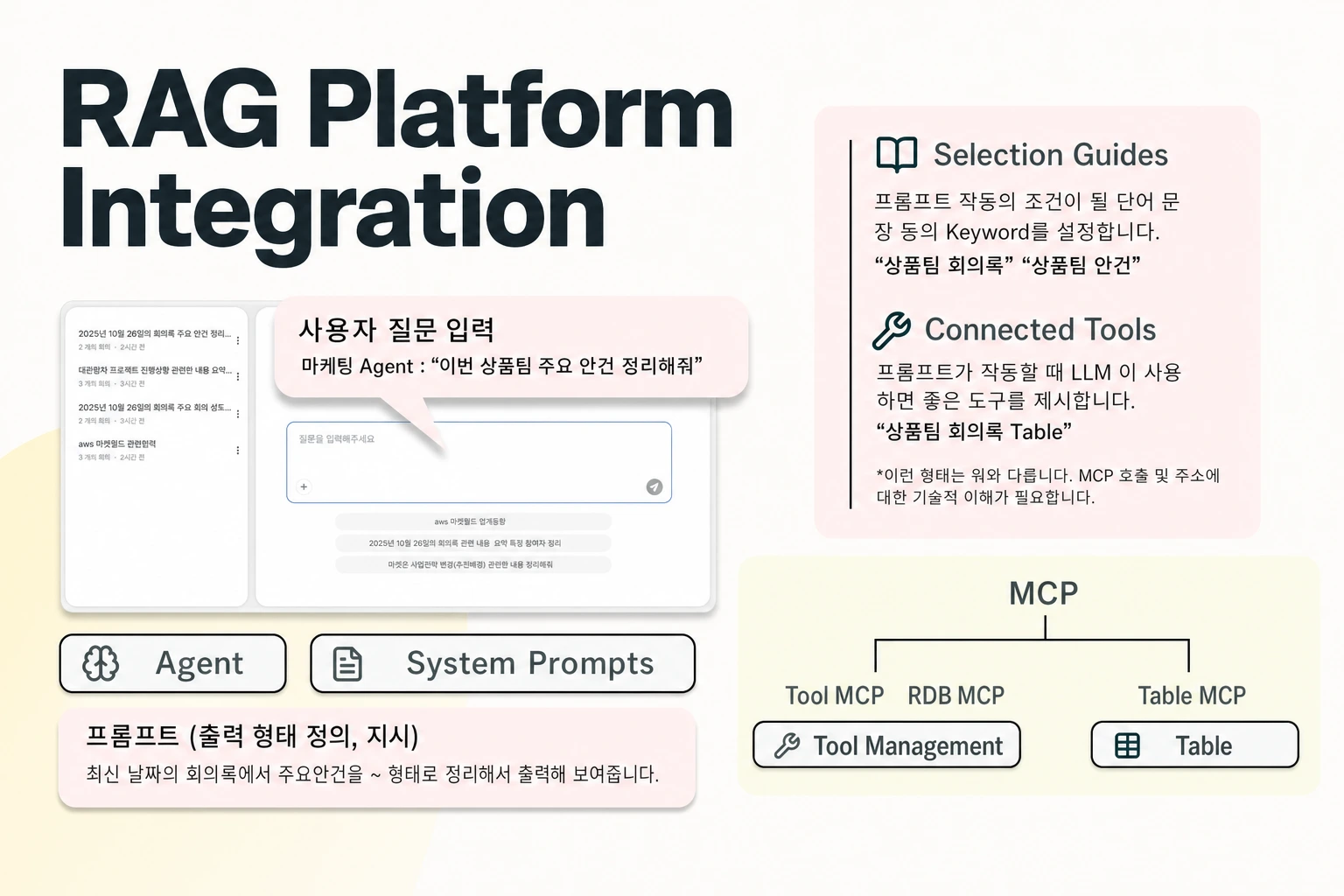
- Unify pipeline and agent operations: Agent Ops handles AI-agent creation, deployment, and management, while MCP-standard tool calling connects agents to tools such as GitHub, Slack, PostgreSQL, and Atlassian.
When designing a retrieval-augmented generation (RAG) architecture, engineering teams must decide between wiring together standalone parsing, splitting, and embedding libraries or adopting a built-in ingestion workflow. Connecting separate libraries requires maintaining custom glue code every time a document schema changes or an upstream file updates. Evaluating how Seahorse Cloud integrates document parsing, semantic chunking, embedding, and vector sync into a single workflow helps teams determine which operational responsibilities they can consolidate.
Built-In Ingestion Scope
Connecting an object store, a layout parser, a text splitter, and an embedding endpoint as separate services introduces multiple failure points across a data pipeline. When an engineering team manages these stages independently, every uploaded file requires orchestration logic to extract text, split segments, generate embeddings, and write records into a target index.
Seahorse AI-based storage is S3-compatible object storage that combines an autonomous, agentic document parser using VLM, OCR, and LLM with semantic chunking. It also includes automatic vectorization and automatic vector database synchronization within the same AI-based storage path. Because Seahorse Cloud integrates semantic chunking with document parsing, embedding, and vector sync right inside its document ingestion workflow, it reduces the separate components a team must connect. When files are uploaded, the platform chunks and embeds them and loads them into the dedicated Table created for a Storage.
Teams planning their access control architecture should account for how data updates and access rules interact. The official documentation does not describe whether source-document permission changes carry over through automatic vector database synchronization, so test how access changes are reflected before relying on them.
Full-Stack Platform Components
Beyond the ingestion stage, operating a production RAG environment requires infrastructure for storing vectors, executing queries, and hosting agent endpoints. You can evaluate the broader platform components below to see how storage, retrieval, and deployment fit into your infrastructure strategy.
- Full-stack managed RAG scope: Seahorse Cloud covers object storage management, a vector database, an autonomous parser, and a managed agent system, transforming unstructured documents into AI-ready knowledge through autonomous parsing, semantic chunking, and intelligent agents.
- Deployment and delivery models: The platform features a Kubernetes-native architecture for deployment with standard resources, and it is available as an on-premises installation or a SaaS subscription.
- Managed vector database capabilities: Seahorse Database is a container-based managed vector database with a built-in control plane, multi-tenant isolation, and table and schema management. It also provides real-time monitoring and API-key authentication while supporting NVMe optimization and VDPU acceleration.
- Managed agent system: Managed agents provide an agentic AI system on the vector database and RAG, featuring MCP standard compliance, tool-call support, an inference endpoint API, and usage tracking.
Agent Ops and Tool Integration
Once documents are vectorized and stored in a database table, teams still have to compose retrieval pipelines, connect external data tools, and monitor runtime behavior in production. Building custom scripts for ingestion is only one part of the maintenance load; keeping retrieval pipelines and downstream AI agents running reliably requires dedicated operational tooling.
In Seahorse Cloud, the Storage pipeline handles parsing, chunking, embedding, and Table sync, while the managed vector database provides real-time monitoring. If your architecture extends beyond retrieval into autonomous task execution, Agent Ops covers AI-agent creation, deployment, and management, with usage tracking for managed agents. To connect these layers with external resources, MCP-standard tool calling links agents to tools such as GitHub, Slack, PostgreSQL, and Atlassian. Separating these operational layers helps architecture teams see where document pipeline management ends and where agent lifecycle management and external tool integration begin.
FAQS
FAQ
How does a built-in document pipeline compare to assembling chunking and embedding separately?
Seahorse Cloud integrates semantic chunking with document parsing, embedding, and vector sync, building native semantic chunking into its document ingestion workflow to reduce the separate components a team must connect. Within the AI-based storage path, S3-compatible object storage combines an autonomous VLM, OCR, and LLM document parser with automatic vectorization and automatic vector database synchronization. Choose a built-in workflow when reducing integration work and routine pipeline maintenance is the priority. When evaluating a separately assembled pipeline, weigh the need to control individual parsing, chunking, and embedding stages against the effort of maintaining their connections.
Where do uploaded files go after Seahorse Cloud chunks and embeds them?
Seahorse Cloud chunks and embeds uploaded files and loads them into the dedicated Table created for a Storage.
Does automatic vector database synchronization also update document permissions?
The official product pages and manual do not describe permission propagation through automatic vector database synchronization, so test how source-document access changes are reflected in search results and agent access before production use.
Try it now
See how these criteria hold up on the real thing.