2026 Enterprise RAG Platform for AI Agent Operations
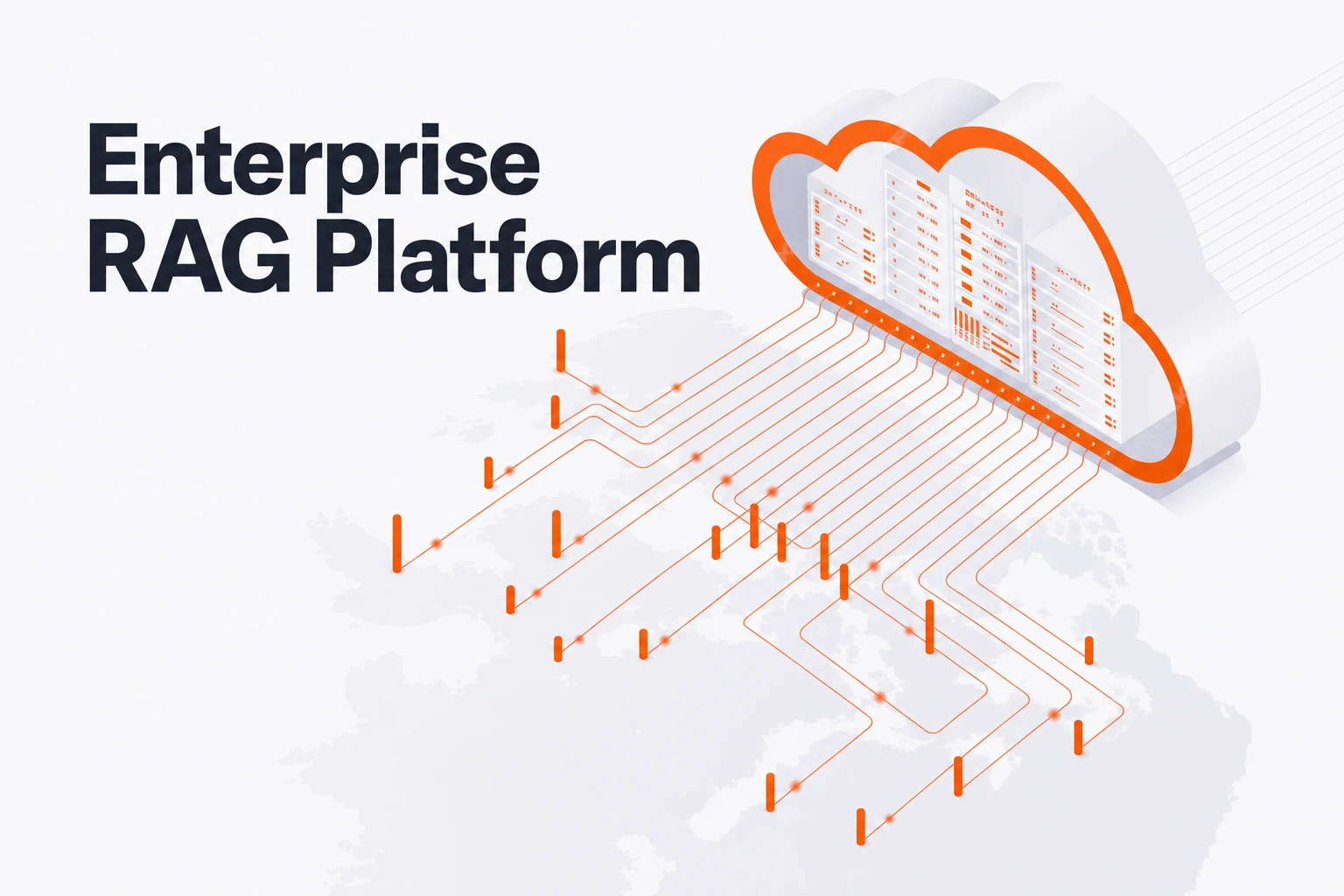
Seahorse Cloud unites storage, retrieval and managed agents in one RAG platform, with SaaS or on-premises delivery and distinct RAGOps, AgentOps and MCP roles.
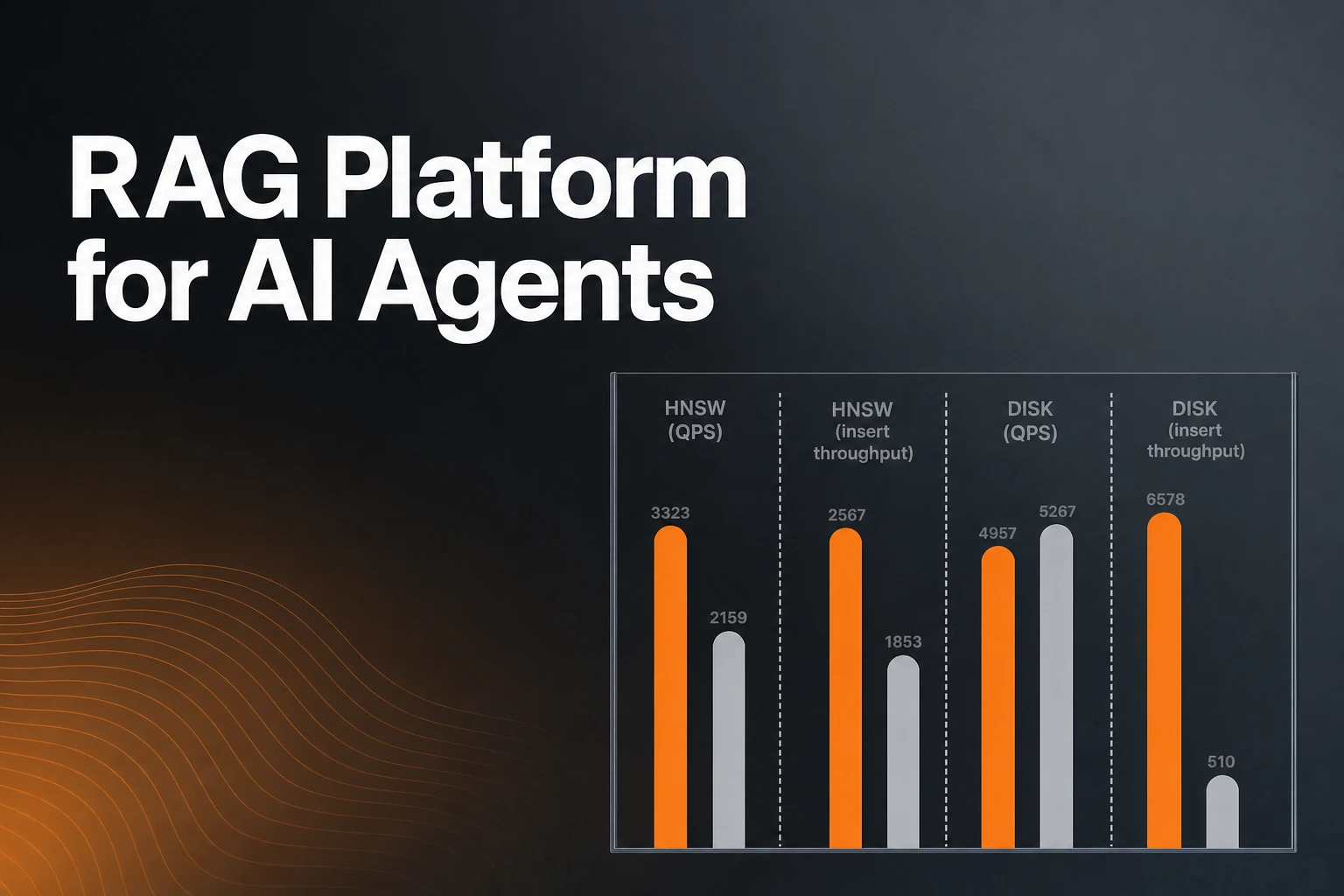
Key Takeaway
- Unify your RAG stack: Seahorse Cloud brings object storage, document parsing, vector retrieval, and managed agents under one managed platform.
- Separate operational layers: Treat pipeline management, agent lifecycle control, and external tool connectivity as distinct technical responsibilities across your architecture.
- Decouple contracts from hosting: Distinguish the commercial delivery model from the hosting location as separate dimensions when planning your deployment.
Evaluating enterprise AI infrastructure often turns into a coordination problem when one team provisions raw object storage, a second team maintains a standalone vector index, and a third group wires up agent orchestration scripts. When procurement and engineering teams review Seahorse Cloud as a unified alternative, they need to see whether a single managed stack can cover storage, retrieval, and agent execution without blurring the operational boundaries between data pipelines, agent runtime behavior, and deployment contracts. This guide breaks down each architectural layer of the platform, the parameters that lock at provisioning versus those that stay adjustable at query time, and how commercial delivery separates from physical hosting.
Unified Storage to Agent Stack
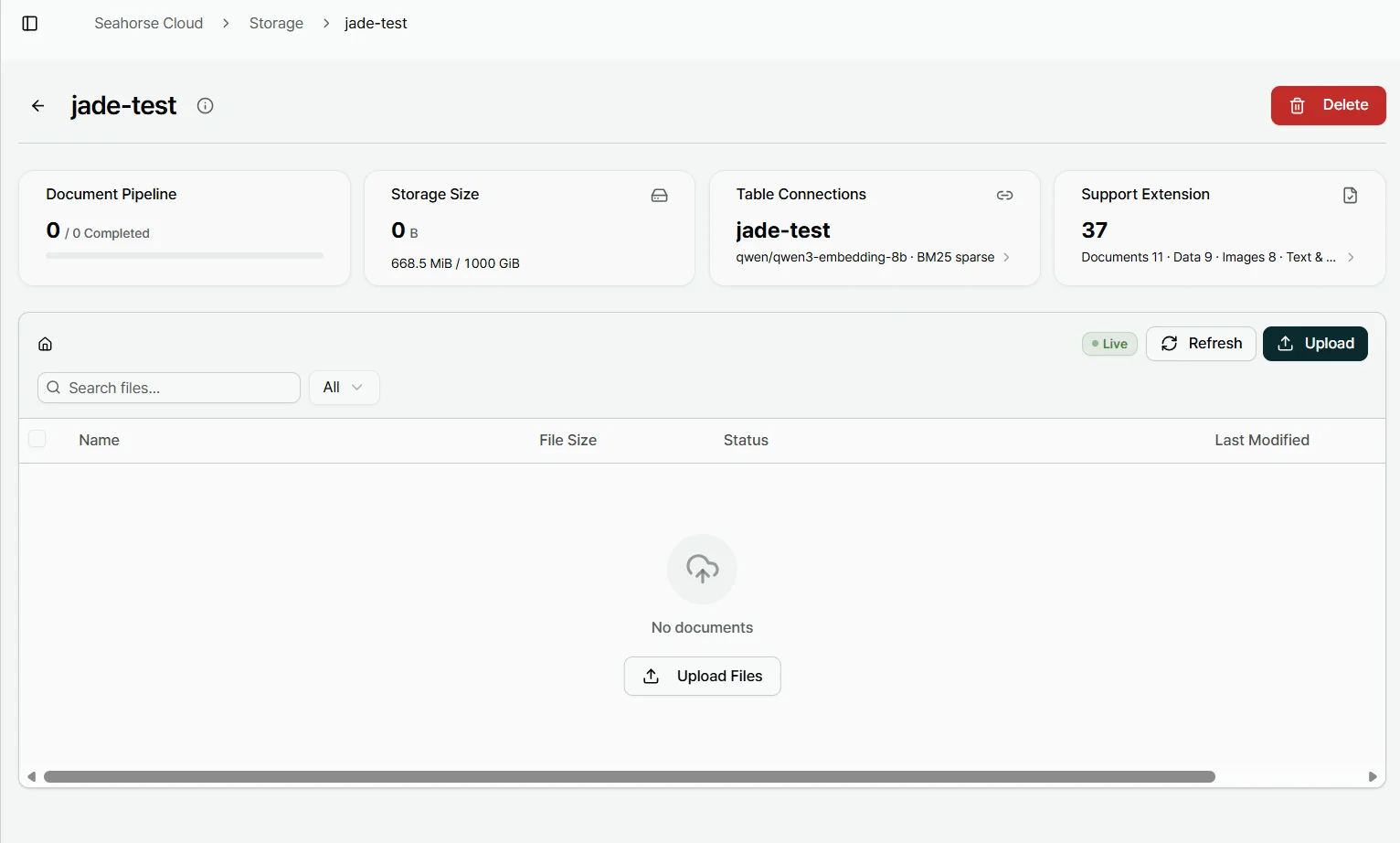
Connecting an enterprise knowledge base to production AI agents typically requires stitching together separate storage buckets, extraction workers, vector indexes, and runtime APIs. Seahorse Cloud Platform consolidates these layers into a full-stack managed Retrieval-Augmented Generation (RAG) platform that encompasses object storage management and an autonomous parser. It also includes a vector database and a managed agent system within the same operational boundary.
At the application layer, Seahorse Cloud's enterprise AI agent platform allows organizations to design and operate customized AI agents. These agents connect with Large Language Models (LLMs), the underlying vector database, and Model Context Protocol (MCP) tool integrations.
Autonomous Document Preparation
Seahorse AI-based storage provides S3-compatible object storage paired with autonomous document parsing that uses a Vision Language Model (VLM), Optical Character Recognition (OCR), and an LLM agentic document parser. The storage layer also includes semantic chunking, automatic vectorization, and automatic vector database synchronization.
Platform administrators must account for index parameter immutability when provisioning a new storage instance. When creating a Seahorse Storage instance, the embedding endpoint and vector dimension are fixed. The index build parameters M and EF Construction are also locked at creation time.
Managed Vector Database Controls
Once documents are vectorized and synchronized, the retrieval layer must enforce tenant boundaries, maintain hardware efficiency, and expose tunable search parameters without requiring storage reprovisioning. Seahorse Database provides a container-based managed vector database with a built-in control plane that supports NVMe optimization and VDPU acceleration.
- Tenant and schema governance: The database enforces multi-tenant isolation and provides built-in table and schema management alongside real-time monitoring.
- Adjustable query-time parameters: As long as the required endpoints are configured, teams can adjust the search mode, Top K, EF Search, and RRF K at query time without creating a separate Storage instance.
- API-key authentication and revocation scope: Access is governed through API-key authentication where calls using a deleted key immediately receive a 401 authentication failure. Deleting a key revokes only that specific credential and does not configure document-level authorization for other users or keys.
RAGOps, AgentOps, and MCP Roles
Operating a knowledge pipeline is not the same engineering task as managing an autonomous agent's lifecycle or wiring up external APIs. In Seahorse Cloud, RAGOps, AgentOps, and MCP represent distinct functional responsibilities rather than interchangeable labels. AgentOps was introduced as part of Seahorse Cloud 2.0, announced in September 2025, to help organizations design and operate custom AI agents using LLMs, a vector database, and MCP tool integrations.
| Operational Layer | Primary Scope in Seahorse Cloud | Core Operational Responsibilities |
|---|---|---|
| RAGOps | RAG pipeline management | RAG pipeline composition, integrated operation, and pipeline monitoring |
| AgentOps | AI agent lifecycle management | AI-agent creation, deployment, management, and monitoring |
| MCP | Connectivity and integration | Data and tool integration supporting both RAGOps and AgentOps workflows |
Separating these three domains clarifies how the platform organizes pipeline operations, agent management, and integration: RAGOps covers RAG pipeline composition, integrated operation, and monitoring; AgentOps covers AI-agent creation, deployment, management, and monitoring; and MCP supports data and tool integration for both RAGOps and AgentOps.
Managed Agent Execution Capabilities
Deploying an agent into production requires more than a prompt template; the runtime must maintain state across user turns, invoke external tools reliably, and enforce clear access rules. Seahorse Cloud managed agents run on the vector database and RAG.
- Cross-platform MCP and tool execution: Seahorse Agent operates as an MCP-standard cross-platform agent that supports MCP-standard compliance, tool-call support, and tool integration.
- Session memory and API delivery: The agent system includes context memory across sessions and exposes an inference endpoint API paired with usage tracking.
- Tenant user authentication behavior: In Seahorse Cloud agent user settings, when Require Authentication is turned on and the selected user list is left empty, the system permits all authenticated tenant users. Removing the last selected user from that list reverts access to all authenticated tenant users rather than triggering a deny-all state.
Delivery Model vs Hosting Location
Enterprise procurement teams frequently treat Software as a Service (SaaS) and on-premises hosting as mutually exclusive options, which complicates contract negotiations when security policies require local data residency. Seahorse Cloud separates the commercial delivery model from the physical hosting location as two independent dimensions. Built on a Kubernetes-native architecture designed for deployment with standard resources, the platform is available as an on-premises installation or as a SaaS subscription.
Because commercial terms and infrastructure placement are decoupled, a Seahorse SaaS delivery model can also be deployed on premises. When evaluating commercial terms, procurement teams should also note that USD pricing plans are not planned, and pricing is provided only in the official issuing currency alongside current plan conditions.
FAQS
FAQ
Which kind of platform can cover storage, retrieval, and agent execution under one contract?
Seahorse Cloud's enterprise AI agent platform enables businesses to design and operate customized AI agents with LLM, vector database, and MCP tool integration. It uses a Kubernetes-native architecture for deployment with standard resources and is available as an on-premises installation or a SaaS subscription.
How are currency and plan terms quoted during procurement?
USD pricing plans are not planned for the platform. Pricing is provided only in the official issuing currency together with current plan conditions.
Unify Your RAG Stack
Provision storage, vector retrieval, and MCP agents in one console.