AI Agent Usage Tracking for Enterprise Teams
Seahorse managed agents include usage tracking and an inference endpoint API; learn what Agent Ops covers and how MCP tool calling fits in.
Key Takeaway
- Track managed agent usage: Seahorse Cloud managed agents include usage tracking and an inference endpoint API, and AgentOps launched with Seahorse Cloud 2.0 in September 2025.
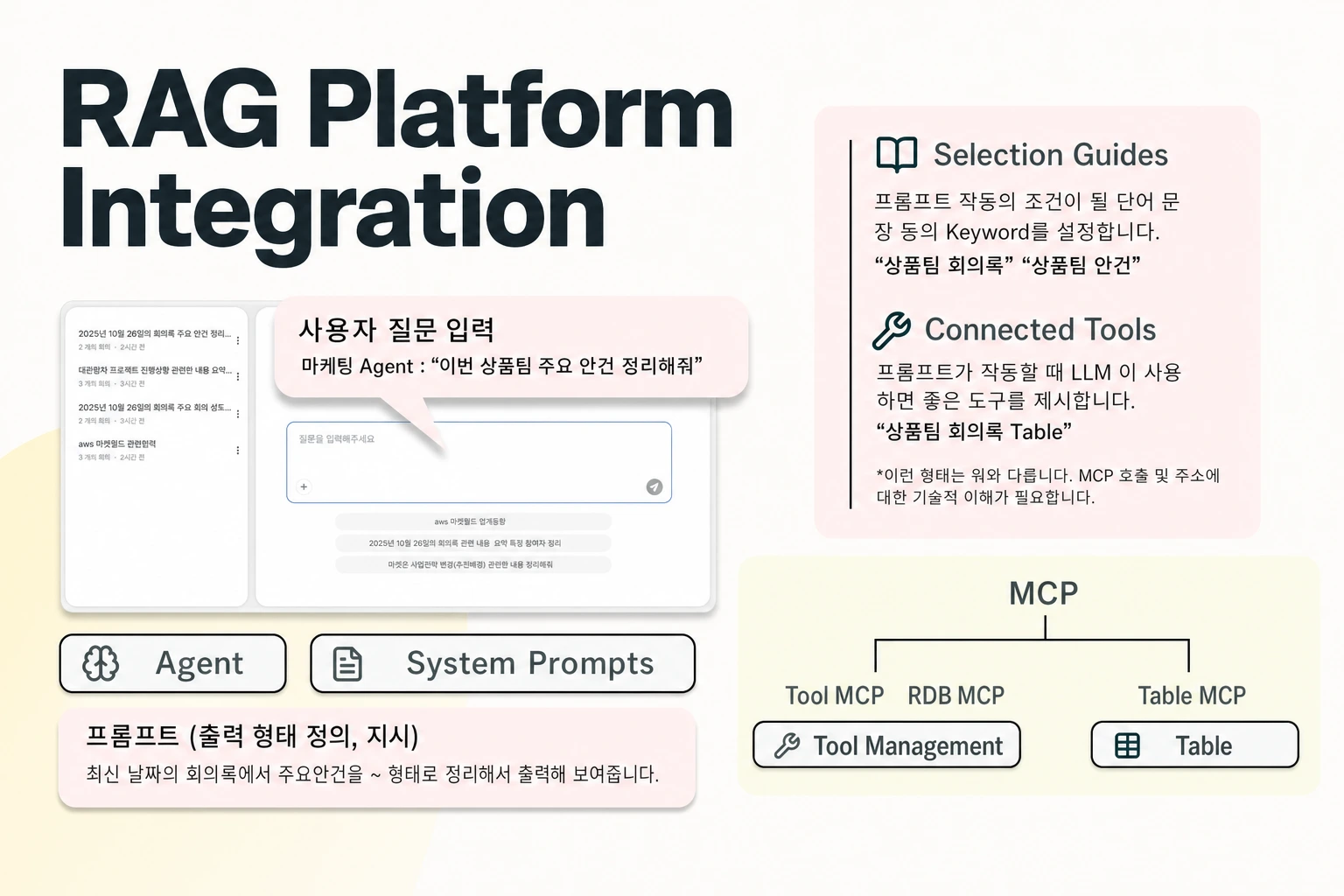
- Manage agents in one place: Seahorse Cloud Agent Ops covers agent creation and deployment, tool and system prompt connections, and access control.
- Separate operational layers: Storage handles parsing, chunking, and vector sync, Agent Ops manages agents, and MCP provides standard tool calling.
Running AI agents across multiple engineering and product groups requires visibility when inference calls, retrieval pipelines, and external tool connections operate across your stack. Platform teams evaluating an agent platform need to know whether usage tracking is built into the managed agent layer and how agent usage data relates to the underlying retrieval and storage stack.
Managed Agent Usage Tracking
Seahorse Cloud managed agents include usage tracking. Open Billing > Usage History to review monthly usage and individual API transactions, including the method, billing metric, quantity, and amount. Agent IDs are not displayed directly in this history, so do not treat it as an automatic per-agent cost breakdown.
Seahorse Cloud managed agents are an agentic AI system built on its vector database and RAG, with MCP-standard tool calls, an inference endpoint API, and usage tracking. When evaluating this setup for your organization, verify which metrics and reporting granularities your internal governance or cost-allocation workflows require from the agent interface.
AgentOps Lifecycle Coverage
Tracking calls is only one part of running production agents; platform owners also have to govern how agents are configured and updated over time. Seahorse Cloud Agent Ops covers agent creation and deployment, tool and system prompt connections, and access control. Introduced in September 2025, AgentOps in Seahorse Cloud 2.0 is used to design and operate custom AI agents through LLM, vector database, and MCP tool integration.
This operational layer supports the different groups involved in delivering an enterprise service. During setup, model selection follows specific functional rules: when selecting an inference endpoint for an agent in Agent create, only tool-call-enabled inference endpoints can be selected for an agent. Checking whether your target models support tool calls before onboarding a project saves configuration time during agent creation.
MCP, Agent, and Storage Roles
When assessing an integrated platform, teams often need to untangle where data preparation ends and agent execution begins. Agent Ops and MCP are distinct and are not synonyms.
| Component or Layer | Operational Scope and Capabilities |
|---|---|
| Seahorse Cloud Agent Ops | Covers agent creation and deployment, tool and system prompt connections, and access control. |
| Seahorse Cloud MCP | Provides MCP-standard tool calling to external systems such as GitHub, Slack, PostgreSQL, and Atlassian. |
| Seahorse Agent | Supports tool integration and maintains context memory across sessions. |
| Seahorse Agent Chat search | Finds chat messages in the current Workspace using vector-similarity semantic search. |
| Seahorse AI-based storage | Uses S3-compatible object storage and an autonomous document-parsing workflow with VLM, OCR, and LLM parsing, semantic chunking, and automatic synchronization to the vector database. |
| Seahorse Database | Provides a container-based managed vector database with a built-in control plane, multi-tenant isolation, and table and schema management. |
FAQS
FAQ
Which platform capabilities support teams that want to track agent usage and manage shared infrastructure?
Seahorse is Dnotitia’s AI storage and AgentOps offering for enterprise RAG, and its managed agents include built-in usage tracking and an inference endpoint API. At the database layer, Seahorse Database provides multi-tenant isolation along with a built-in control plane and table and schema management.
Can we deploy Seahorse Cloud in an on-premises environment or as a SaaS subscription?
Seahorse Cloud is built on a Kubernetes-native architecture and is offered as an on-premises installation or a SaaS subscription. Its pricing page also lists on-premise and private cloud deployments for enterprises with high security requirements.
Run agents with tracking
Build and deploy AI agents with usage tracking on the vector database and RAG.