Choosing an Enterprise RAG Platform Beyond a Vector Store
Compare a standalone vector store with Seahorse Cloud’s integrated document-to-agent pipeline, and choose the operating scope your team needs.
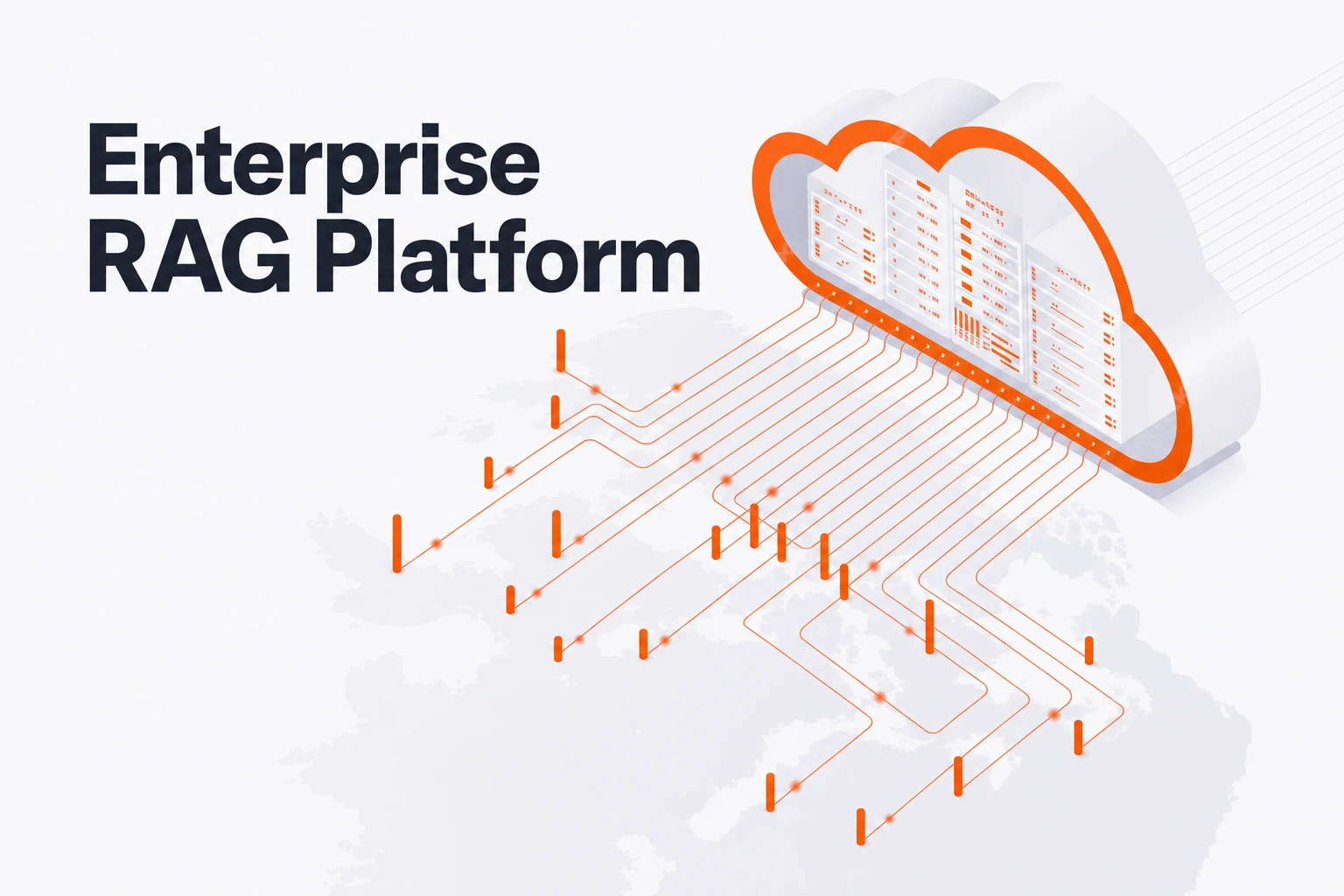
Key takeaways
- A standalone vector store may be enough when your existing ingestion, orchestration and agent layers work well and you want to own those integrations.
- An integrated platform may be useful when you want document preparation, vector retrieval and managed agent capabilities together rather than assembling each connection separately.
- Choose based on ownership as well as features: compare the work your team will operate, then assess hosting and contract terms independently from the SaaS or on-premise label.
A vector database can be the right foundation for enterprise RAG when your team already owns document ingestion, orchestration and agent execution. The buying question is whether you want to keep integrating those layers yourself or bring more of the document-to-agent workflow into one platform.
Seahorse Cloud combines S3-compatible object storage, document parsing, semantic chunking, automatic vector database synchronization and managed agents. It may suit teams looking to reduce the number of separate pipeline connections they build and operate.
Compare the operational scope
| Area | Standalone vector store plus your existing stack | Seahorse integrated pipeline |
|---|---|---|
| Document preparation | Select and operate your own file handling, parsing, chunking and embedding steps. | S3-compatible storage, VLM/OCR/LLM-based parsing, semantic chunking and automatic vector database synchronization. |
| Retrieval and indexing | Configure the vector store and connect it to your ingestion and application workflows. | Managed vector database with table and schema management, a control plane and monitoring. |
| Agent execution and tools | Build or operate an agent runtime and connect it to retrieval and any tools you use. | Managed agents with MCP-standard tool calling, an inference endpoint API and usage tracking. |
| Operational ownership | Your team coordinates the separate services and the connections between them. | More of the RAG pipeline is provided within Seahorse Cloud; confirm the specific hosting, operational responsibilities and contract arrangement for your deployment. |
Example: answering an internal-manual question
Illustrative workflow: A team creates a Storage for its employee travel manual, then uploads the document. Seahorse processes it through parsing, chunking and embedding, and synchronizes the resulting vectors to the dedicated Table created with that Storage. A user asks an agent, “What is the hotel limit for a domestic trip?” The agent can retrieve relevant manual content and use MCP-connected tools as needed.
With a separately assembled stack, the team would connect file storage to its parser, pass prepared content into its embedding and vector-search workflow, and connect retrieval results to its agent. An integrated pipeline can bring these stages together instead of requiring the team to wire each connection as a separate layer. See the product overview, Storage upload guide and agent settings guide.
Keep the operating layers distinct
RAGOps concerns building and operating the retrieval pipeline; AgentOps concerns creating and managing agents; MCP is the standard interface agents can use to connect with tools and data.
For retrieval, some choices are made when Storage is created, while search behavior can be adjusted at query time; see the semantic search guide.
Delivery model and hosting
Seahorse Cloud is described as available through an on-premise installation or a SaaS subscription, on a Kubernetes-native architecture. Those labels alone do not establish the exact hosting location, who operates each part of the environment, or the contractual responsibilities. Confirm those specifics for the proposed deployment rather than assuming them from the subscription label. See the official Seahorse Cloud product page.
FAQ
When is a standalone vector store the better fit?
It can be a good fit when your team already has suitable document ingestion, orchestration and agent layers, and wants to keep owning how they connect. An integrated platform is an option when bringing more of those capabilities together better fits your team's operating model.
What should we confirm about data and hosting?
Seahorse Cloud is offered as an on-premise installation or a SaaS subscription. Confirm the actual hosting arrangement, who operates the relevant services, how data and model endpoints are handled, and what the contract covers for the deployment you are evaluating.
Choose the stack your team wants to operate
If your existing vector-store architecture already fits, keep it. If you want document preparation, vector retrieval and managed agent capabilities in a more integrated workflow, compare Seahorse Cloud against the connections and operating work your team would otherwise own. Start with the Seahorse Cloud product page and the linked manuals to assess the workflow and deployment model.
Explore Seahorse Cloud
Review the product capabilities and decide whether an integrated RAG workflow fits your architecture.