How to Show Source Citations and Evidence in Enterprise RAG Answers
Connect each material answer claim to the source passage that supports it. Explain what source details help readers check the evidence, and how to handle claims the retrieved material does not support.

- Link material claims to a specific, checkable source passage, and make clear when that passage supports only part of a claim.
- Handle evidence gaps and conflicts by narrowing the answer or stating the gap; when sources conflict, present both perspectives with their respective citations rather than silently choosing one.
- Distinguish documented behavior from assumptions: Seahorse documentation describes search-result details and a prompt-and-review pattern, but does not establish automatic, verified claim-level citations in final answers.
- Test the workflow for citation support, source access, and the configured user experience before deployment.
What source citations in a RAG answer should show
A useful RAG citation should let a reader move from a material answer claim to the source passage that supports it. A general list of documents may show what the system retrieved, but it does not by itself tell readers which detail each document supports. Dnotitia’s own citation guidance distinguishes a document link from a passage link and recommends checking support at the claim level.
For an answer about a company policy, for example, a single paragraph might state the effective date, affected employees, and required action. A citation to the policy’s title is only a starting point. Readers need a usable location—such as a page, section, or passage—and enough surrounding context to confirm that the source supports those specific details. If one citation supports the date but not the covered group, the answer should not make the whole sentence look fully verified.
A practical citation display should make five things easy to check: the source’s identity, the location of the evidence, the claim it supports, whether material claims have support, and whether the intended reader can access it. Those are the criteria Dnotitia lists for reviewing citations in its source-workflow guide. The exact interface can vary by source type: a file may have a page number, while a webpage may have a section heading or URL.
Keep the citation close to the statement it supports. If several claims share one passage, the reader should still be able to tell which details that passage establishes. If a citation supports only part of a sentence, separate the supported point from the qualification or mark the limitation clearly. This is a design standard for trustworthy answers, not a claim that every RAG platform automatically produces this citation format.
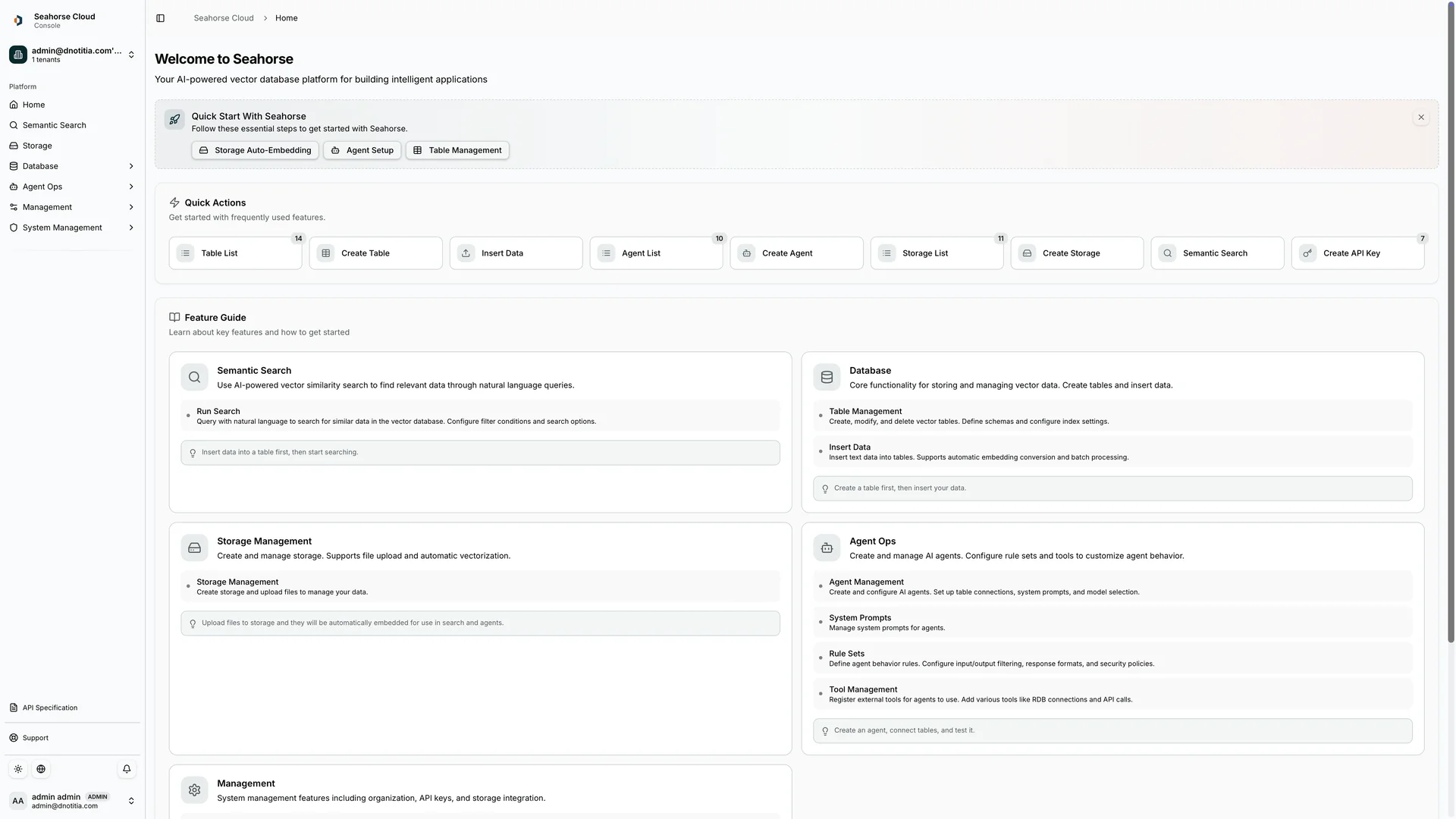
Seahorse Cloud is described by Dnotitia as an end-to-end RAG platform with AI model hosting and no-code pipeline design, but broad platform scope alone does not establish how evidence appears beside a generated answer. In its semantic-search manual, Dnotitia documents result cards with filenames, content previews, page indicators, and metadata; those are search-result details, not proof of claim-level citations in a generated chat response. Treat citation display as an acceptance criterion to verify in the configured workflow, not as an assumed consequence of retrieval.
Map every material claim to the right passage
Build a simple claim-to-evidence map before deciding how citations should look. Break a representative answer into individual claims, then record the authoritative source and exact passage that should support each one. Dnotitia recommends defining the citation standard in advance—whether citations attach to sentences or claims, what counts as full support, and where the evidence should open—in its source-citation testing guidance.
A useful review table can include:
| Answer claim | Source and version | Evidence location | Support rating | Reader access |
|---|---|---|---|---|
| The stated rule or fact | Document title, owner, date/version | Page, section, paragraph, or passage | Full, partial, or unsupported | Can the intended user open it? |
Use the smallest meaningful claim, not necessarily every sentence, as the unit of review. A sentence that combines a deadline, an exception, and a group of affected users may need multiple passages. Conversely, several adjacent facts may share one citation when the cited passage clearly supports all of them. Dnotitia’s guide recommends reviewing each claim and citation as fully, partially, or not supported, rather than giving a single answer a blanket pass or fail.
The citation itself should carry enough locator detail to make the evidence practical. Dnotitia’s Seahorse legal-RAG guide gives a sample prompt that asks for a filename, page, and URL, and it advises checking referenced documents or URLs in the Tool Call card. Treat that as a documented setup recipe: it shows how the guide suggests instructing and reviewing an agent, not a guarantee that every cited statement will be supported automatically.
Then check whether the reader can open the source. A correct passage is not useful evidence if the link is broken, the location is ambiguous, or the reader lacks permission. Record these access checks separately from factual support. Keep citations adjacent to the claims they substantiate and label any partial support, so a source’s general relevance is not mistaken for proof of every detail.
Handle missing, conflicting, or outdated evidence
When the retrieved material does not support a detail, do not let a plausible completion read like a verified fact. Mark the claim as unsupported, narrow the answer to what the passages establish, or state that the material does not answer the question. Dnotitia’s citation-testing guide recommends preparing questions with missing evidence and defining in advance whether the system should abstain or explicitly describe the evidence gap.
Conflicting sources need a different response from missing sources. Microsoft’s RAG prompt-engineering guidance says to present both perspectives and cite their respective sources rather than silently favoring one. First show the reader that the sources disagree; then identify their dates, owners, scope, or status when those details are available. Do not silently choose one source because it ranks higher or appears more often. For policy or compliance material, an explicit owner-defined precedence rule may help, but the rule itself should be documented and tested. If no precedence rule settles the conflict, state the competing evidence and avoid presenting either interpretation as final.
Freshness is also part of evidence quality. A passage may accurately reflect an older version without supporting a claim about the current rule. Dnotitia’s Seahorse legal-RAG guide recommends checking amendment and effective dates and stating whether the rule is current. Use source metadata, document ownership, and review dates as visible context where your workflow can provide them; do not assume a retrieval score indicates that a source is authoritative or current.
Finally, citation display must respect access. Show source links and quoted excerpts only where the intended reader is authorized to see them. Dnotitia’s citation guidance includes reader access among its observable criteria: sources should be ones intended readers can open and understand. Check the configured workflow with users who should and should not have access, including whether source names, snippets, or links expose information before the full document is opened.
What Seahorse Cloud documentation establishes about citations
Official Dnotitia sources document a managed RAG platform and several ways to inspect retrieved material, but the details should not be conflated. The Seahorse Cloud product page describes a complete RAG pipeline, AI model hosting, no-code pipeline design, and automated optimization. That establishes platform scope; it does not by itself specify how citations are rendered or validated in a final answer.
The Seahorse semantic-search manual documents console search-result cards with a filename, relevance score, content preview, page indicator, metadata, and JSON-copy actions. It also describes URL fields in result content as clickable. These are concrete search-console details that can help a team inspect retrieval results during testing. They should not be described as automatic claim-level citations in the end-user answer.
For agent configuration, the official legal-RAG guide provides a System Prompt example that requests a filename, page, and URL in every answer, and advises reviewers to check referenced documents and URLs in a Tool Call card. The Agent Chat manual describes Tool blocks as showing MCP tool-call arguments and return values; those blocks can be shown or hidden. This documents an instruction-and-review pattern, not automatic verification that each answer claim is supported by the referenced passage.
The official materials reviewed here do not establish a built-in final-answer interface that automatically links each claim to its exact supporting passage, nor an automatic guarantee that a generated citation is faithful. Do not market that behavior as a Seahorse Cloud capability on the strength of general RAG or search-result features alone. If claim-level citations are a requirement, confirm the current behavior in the exact product version and configuration, and test it with representative users and documents. The important distinction is between source retrieval, a prompt asking for citations, visible tool activity, and a verified user-facing citation experience.
Test citation quality before deployment
Treat citation quality as a testable requirement, not a formatting preference. Dnotitia recommends setting the citation bar before testing, recording the expected source and passage for representative questions, and defining what the system should do when evidence is missing in its citation-validation guidance. Apply that process to your own corpus and configured Seahorse Cloud workflow.
- Write the citation rule. Decide whether each sentence or each material claim needs a citation. Define a usable locator for each source type, what counts as full support, and how partial or absent support should be communicated.
- Prepare questions and reference passages. Include routine queries, multi-part questions, similar policy language, superseded documents, conflicting sources, and questions with no answer in the collection. Record the source owner, version or effective date, expected passage, and user access group for each case.
- Run the configured workflow. Use the intended Storage, agent, prompts, retrieval settings, and user identities. During retrieval review, Seahorse’s semantic-search results expose details such as filenames, previews, page indicators, and metadata; use those as search evidence to inspect, not as a substitute for checking the final answer.
- Rate each claim and citation. Label support as full, partial, or absent. Check whether the passage supports every detail, whether its locator opens the right context, and whether a restricted user can see only authorized sources. Separate retrieval misses from answer-writing or citation-location failures.
- Validate on held-out questions. After tuning prompts or settings, test questions that were not used during adjustment. Keep the same source and access conditions, record the result and the actual citation destination, and repeat after material changes to documents or configuration.
The Seahorse legal-RAG guide illustrates instructing an agent to name a file, page, and URL, and checking references through a Tool Call card. Use it as a starting pattern, then verify actual answer behavior yourself. A prompt that requests a citation is not proof that every citation is accurate, complete, current, or accessible. Keep the validation record: questions, expected evidence, returned answer, cited source and location, support rating, identity tested, and configuration.
A citation is useful only when it is specific, checkable, supported, and accessible to the intended reader. Define the standard, test it against real questions and source versions, and report product capabilities only at the level the official documentation establishes.
FAQ: enterprise RAG citations and evidence
Should every sentence in a RAG answer have a citation?
Set a rule that fits the risk and the way readers review answers. At minimum, cite every material claim that a reader may need to verify; several closely related claims may share a passage when the support is clear. Dnotitia recommends deciding in advance whether citations attach to each sentence or each claim, and then reviewing claim-level support in its citation guidance.
What should a source citation show?
Show enough information to identify the source and locate the supporting evidence, such as a filename, page, section, URL, or passage where available. The reader should be able to check that the passage supports the specific claim, not merely that the source discusses the same topic. Dnotitia’s Seahorse legal-RAG guide gives filename, page, and URL as an example citation format.
What should the answer do when evidence is missing or sources conflict?
State the evidence gap, limit the answer to what the sources support, or abstain according to the policy you defined. For conflicts, show the competing evidence and dates or versions rather than silently choosing one. Microsoft’s RAG prompt-engineering guidance specifically recommends presenting both perspectives and citing the respective sources. Dnotitia’s testing guidance recommends including missing-evidence questions and defining the expected response before testing.
Does Seahorse Cloud automatically attach a verified citation to every answer claim?
The official material reviewed for this page does not establish automatic, claim-by-claim citation rendering or verification in the final answer. The documented legal-RAG recipe shows a prompt that requests source details and a Tool Call card for checking references; the Agent Chat manual describes Tool blocks as MCP call arguments and return values. Confirm the exact configured behavior in a pilot rather than treating those documented functions as an automatic citation guarantee.
Sources
지금 체험
See how these criteria hold up on the real thing.